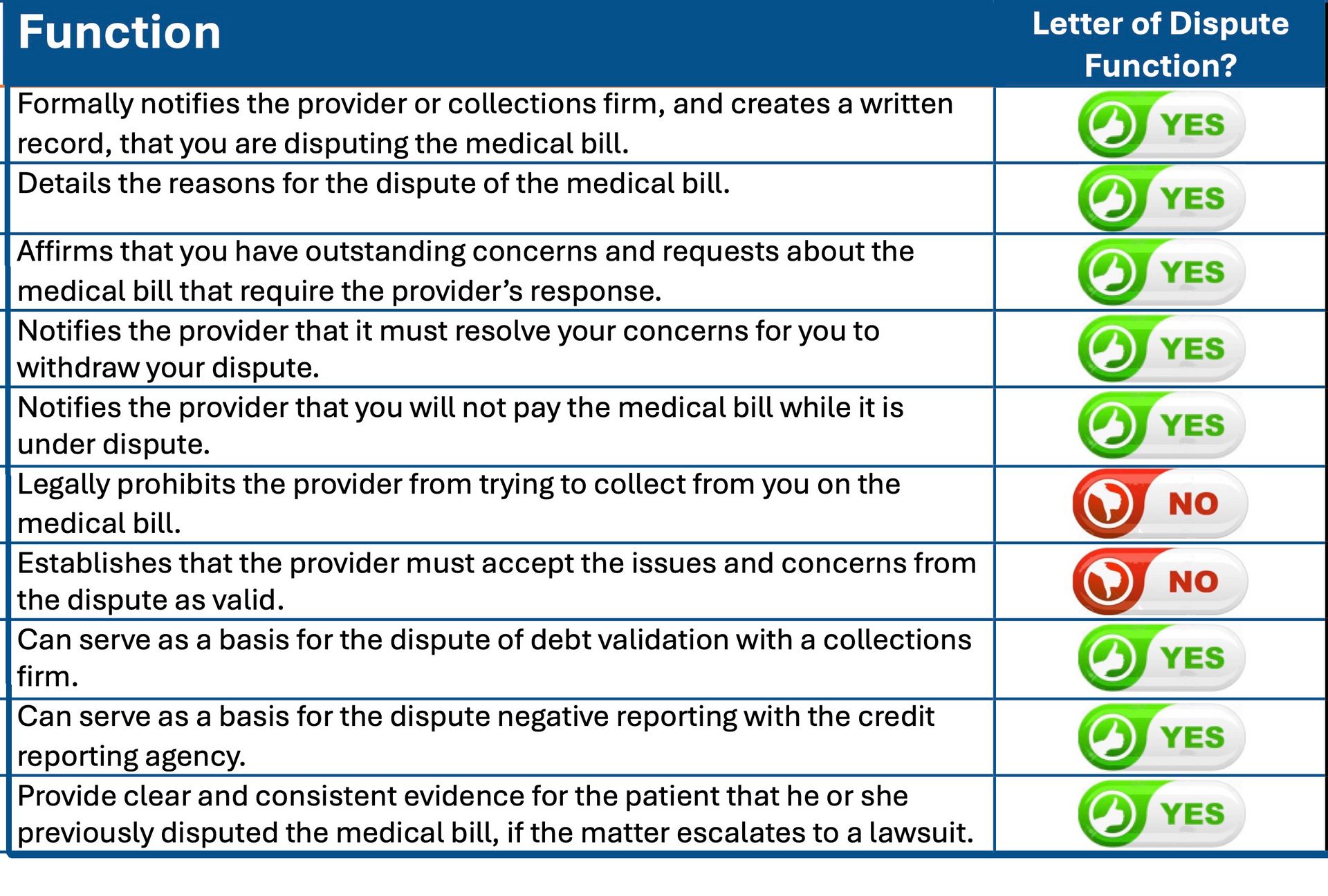
Throughout the dispute, especially when and if the provider continues to try to collect from you on the medical bill while the dispute is active, you are going to reference the Letter of Dispute as affirmation that you have outstanding concerns and requests about the medical bill that require the provider’s response. As you and the provider discuss the dispute, and you consider terms to settle the dispute, you will track each of the LOD’s concerns and requests to inform how willing you are to settle the dispute and under what terms.
What a Letter of Dispute Does Not Do
Even though the Letter of Dispute serves some critical purposes in challenging a medical bill, it has limitations on requiring any immediate change in a provider’s medical bill collection attempts. Most importantly, sending the Letter of Dispute does not mean that the provider is legally required to stop trying to collect from you on the medical bill. There may be specific issues in your LOD regarding laws and regulations that you allege the medical bill may violate, but it typically is not a violation of the law for a provider to disregard a Letter of Dispute and continue to try to collect on the bill. See article The Provider is Still Billing after my Letter of Dispute for more information on this situation.
Another Letter of Dispute limitation is that, although it raises issues and concerns about a medical bill, it does not require that the provider accept those issues and concerns as valid. A good Letter of Dispute is a thorough and truthful accounting of the reasons a patient does not consider that he or she should be obligated to pay a medical bill. The provider can refute those reasons for the dispute, or disregard the Letter of Dispute and reasons.
How to Reconcile What a Letter of Dispute Can and Cannot Do
One may ask, “What good does a Letter of Dispute do if the provider can just ignore it?”. Remember the primary purpose of a Letter of Dispute. The LOD formally notifies the provider, and creates a written record, that you are disputing the medical bill, and details the reasons for the dispute. Even if the provider ignores the LOD, the LOD is aiding your dispute in at least three important ways.
The provider may engage with a collections agency to pursue debt from a patient. Debt collectors are required under the Fair Debt Collection Practices Act to send written notice to validate a debt. Persons have 30 days to dispute the debt in writing. The Letter of Dispute initially sent to the provider can serve as the basis for the dispute of debt validation with a collections firm.
If a medical bill is inappropriately reported to a credit agency (i.e. Experian. Trans-Union, Equifax), the Letter of Dispute can serve the basis for the dispute such reporting with the agency.
If a medical bill dispute escalates into a lawsuit, the Letter of Dispute can provide a clear and consistent evidence for the patient that he or she previously disputed the medical bill, the provider is at fault for its disregard for the Letter of Dispute and its concerns.